Egyptian Numerals Converter
Type a number or pick a date and see it written in ancient Egyptian hieroglyphs, the way scribes carved it.
- 𓆼2 × lotus plant (1,000) = 2,000
- 𓎆2 × cattle hobble (10) = 20
- 𓏤6 × single stroke (1) = 6
Quick answer
Egyptian numerals are a base-10 system with one sign for each power of ten: a stroke 𓏤 for 1, a hobble 𓎆 for 10, a coil of rope 𓍢 for 100, a lotus 𓆼 for 1,000, a finger 𓂭 for 10,000, a tadpole 𓆐 for 100,000 and the god Heh 𓁨 for a million. To write a number, repeat each sign as many times as that digit (up to nine) and add them up, largest first. There is no zero and no place value: 2026 is two lotuses, two hobbles and six strokes, 𓆼𓆼𓎆𓎆𓏤𓏤𓏤𓏤𓏤𓏤.
The seven Egyptian number signs
Every number in hieroglyphs is built from these seven signs. Each is a picture of something, and some of the pictures may explain the value: tadpoles swarmed in the flood pools in their hundreds of thousands, and Heh was the god of endless time.
| Value | Sign | Picture | Egyptian | Gardiner |
|---|---|---|---|---|
| 1 | 𓏤 | single strokeA tally stroke. Strokes are grouped in neat rows: 4 is 𓏤𓏤𓏤𓏤, never a new sign. | wꜥ | Z1 |
| 10 | 𓎆 | cattle hobbleAn arch, usually read as a hobble for cattle. Ten of anything. | mḏ | V20 |
| 100 | 𓍢 | coil of ropeA coil of rope. A hundred of anything. | št | V1 |
| 1,000 | 𓆼 | lotus plantA lotus on its stalk; the Nile marshes produced them in their thousands. | ḫꜣ | M12 |
| 10,000 | 𓂭 | bent fingerA raised finger, perhaps from counting on the hands. Ten thousand. | ḏbꜥ | D50 |
| 100,000 | 𓆐 | tadpoleTadpoles swarm in the flood pools past counting: a hundred thousand. | ḥfn | I8 |
| 1,000,000 | 𓁨 | god HehHeh, the god of endless years, kneeling with both arms raised: a million, or simply ‘countless’. | ḥḥ | C11 |
How to write a number in Egyptian numerals
- Split the number into its digits. 1,922 is 1 thousand, 9 hundreds, 2 tens and 2 units.
- Repeat each power's sign that many times. One lotus, nine coils of rope, two hobbles, two strokes. A digit of 0 gets no sign at all.
- Write the largest first, in the direction the text runs (usually right to left).
- Stack the repeats in tidy groups: three over three over three for nine, four over three for seven. The groups made a number quick to count.
Reading works the same way backwards: count each kind of sign and add. Because the value is in the sign and not its position, the order does not change the number, which is why the reverse converter above accepts the signs in any order.
Examples
Some of the largest numbers in early Egyptian writing are on the Narmer macehead, from about 3100 BCE, which counts the spoils of a victory: 120,000 captives, 400,000 cattle and 1,422,000 goats, written with tadpoles, fingers, lotuses and a single god Heh.
How the Egyptians wrote dates
The Egyptians did not count years from a fixed starting point. A date named the year of the reigning king, the month and the day: “Year 17, under the majesty of…” opens the stela of the steward Mentuwoser, which you can read sign by sign in the Stela Reader. When a new king came to the throne, the count started again at Year 1.
The civil year had 365 days: three seasons of four months, each month 30 days, and five extra days at the end. A month is written with the crescent moon and star 𓇹𓇼 (ꜣbd), its number in strokes, then the season; the day with the sun 𓇳 (sw) and its number.
| Season | Egyptian | Meaning | Months (later Greek names) |
|---|---|---|---|
| Akhet | ꜣḫt | Inundation, when the Nile flooded the fields | Thoth, Phaophi, Hathyr, Choiak |
| Peret | prt | Emergence, when the land came out of the water and was sown | Tybi, Mechir, Phamenoth, Pharmuthi |
| Shemu | šmw | Harvest, the low-water season | Pachons, Payni, Epiphi, Mesore |
The five extra days, “the days upon the year”, were the birthdays of the children of the sky goddess Nut: Osiris, Horus, Seth, Isis, Nephthys. With no leap day, the calendar slipped a quarter of a day each year against the seasons, so festivals named for the flood could fall in the harvest. The date converter above follows that slipping count, the one Greek astronomers kept running, so it shows where a modern date falls on the calendar a scribe would have used.
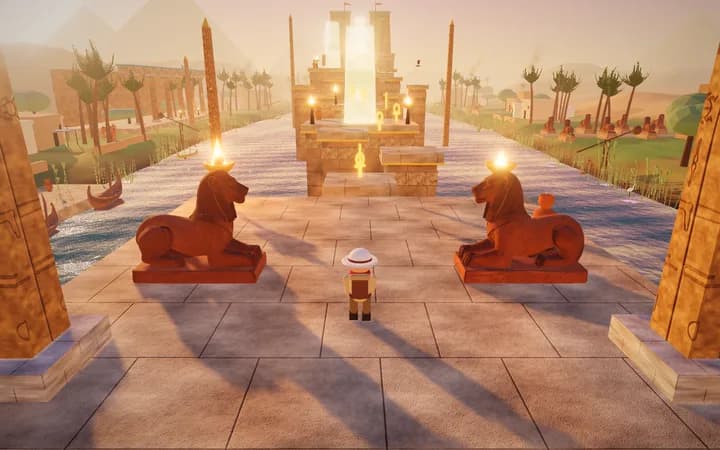
Cross the Causeway of Thoth
Walk the torch-lit path, answer the scribe at each station, and carve your name on the temple gate, one hieroglyph at a time. About 10 minutes, and you keep what you learn.
Learn to read numbers on real monuments
Numbers are everywhere in Egyptian texts: offering lists promise “a thousand of bread, a thousand of beer” with a single lotus, and dates head royal decrees and tomb stelae. The Treasury lesson of the course teaches the number signs, fractions and offering counts with practice, and the first lesson (free to start) teaches the 25-sign alphabet. To put a year next to two names, try two names together; for a single name, the name translator.
Frequently asked questions
How do you write 2026 in Egyptian numerals?
2026 is 𓆼𓆼𓎆𓎆𓏤𓏤𓏤𓏤𓏤𓏤: two lotus plants (2 × 1,000), two cattle hobbles (2 × 10) and six strokes (6 × 1). There is no sign for the hundreds because the number has none; Egyptian numerals have no zero and simply leave a value out.
What are the 7 Egyptian number signs?
A stroke 𓏤 for 1, a cattle hobble 𓎆 for 10, a coil of rope 𓍢 for 100, a lotus plant 𓆼 for 1,000, a bent finger 𓂭 for 10,000, a tadpole 𓆐 for 100,000 and the kneeling god Heh 𓁨 for 1,000,000. Every number is written by repeating these, up to nine of each.
Did the ancient Egyptians have a zero?
Not as a digit. Their numerals were additive, so a missing place is just left out: 105 is a coil of rope and five strokes, with nothing for the tens. Scribes did have a word for nothing left over, nfr, written in accounts for a zero balance and on building guidelines for the base level, but it was never used inside a written number.
What is the Egyptian hieroglyph for a million?
The god Heh 𓁨, kneeling with both arms raised, often holding palm ribs, the sign for counting years. He stood for a million and also for 'countless' or 'eternity', so the sign appears in wishes for a king to live 'millions of years'.
Which way are Egyptian numbers written?
Largest value first in the direction of reading. Most inscriptions run right to left, so the thousands stand on the right and the units on the left; in a left-to-right line it is the other way round. Repeated signs are stacked in neat groups, such as seven strokes as four over three, so a number can be counted at a glance.
What is my birthday on the ancient Egyptian calendar?
Pick your birthday in the Date tab above. The Egyptian civil year had 12 months of 30 days in three seasons (Akhet, Peret and Shemu) plus five extra days, the birthdays of Osiris, Horus, Seth, Isis and Nephthys. It had no leap day, so the converter counts days the way Greek astronomers kept the calendar running, and the Egyptian date of your birthday slowly moves: one day later every four years.
How many days were in the Egyptian year?
365: twelve months of 30 days and five 'days upon the year'. Without a leap day the calendar slipped a quarter of a day each year against the seasons, and came back into line only after about 1,460 years, a span later called the Sothic cycle after the star Sirius (Sothis), whose dawn rising marked the ideal new year.
How did the Egyptians write fractions?
Mostly as unit fractions, one over a number: the mouth sign 𓂋 placed over a number means 'one part of', so 𓂋 over ten strokes is 1/10. Other fractions were written as sums of different unit fractions, as in the Rhind Mathematical Papyrus. There were special signs for 1/2, 2/3 and 3/4. The popular idea that the parts of the Eye of Horus stood for 1/2 to 1/64 is now doubted by historians of Egyptian mathematics.
Can I copy and paste Egyptian numerals?
Yes. The number signs are in Unicode's Egyptian Hieroglyphs block, so the Copy hieroglyphs button gives you text you can paste into a message or document. If they show as empty boxes, the device has no hieroglyph font; the free Noto Sans Egyptian Hieroglyphs font fixes that.
The Store
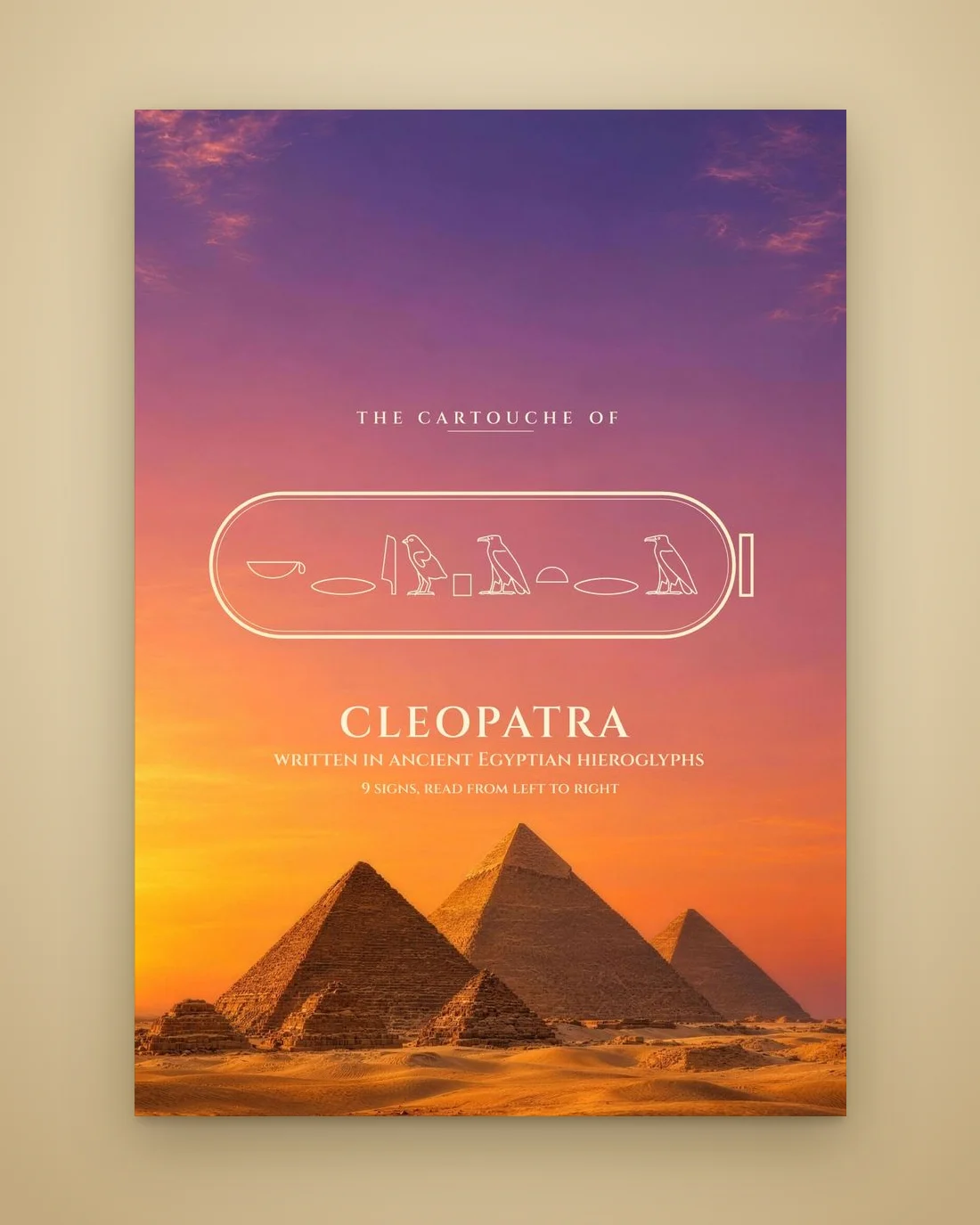
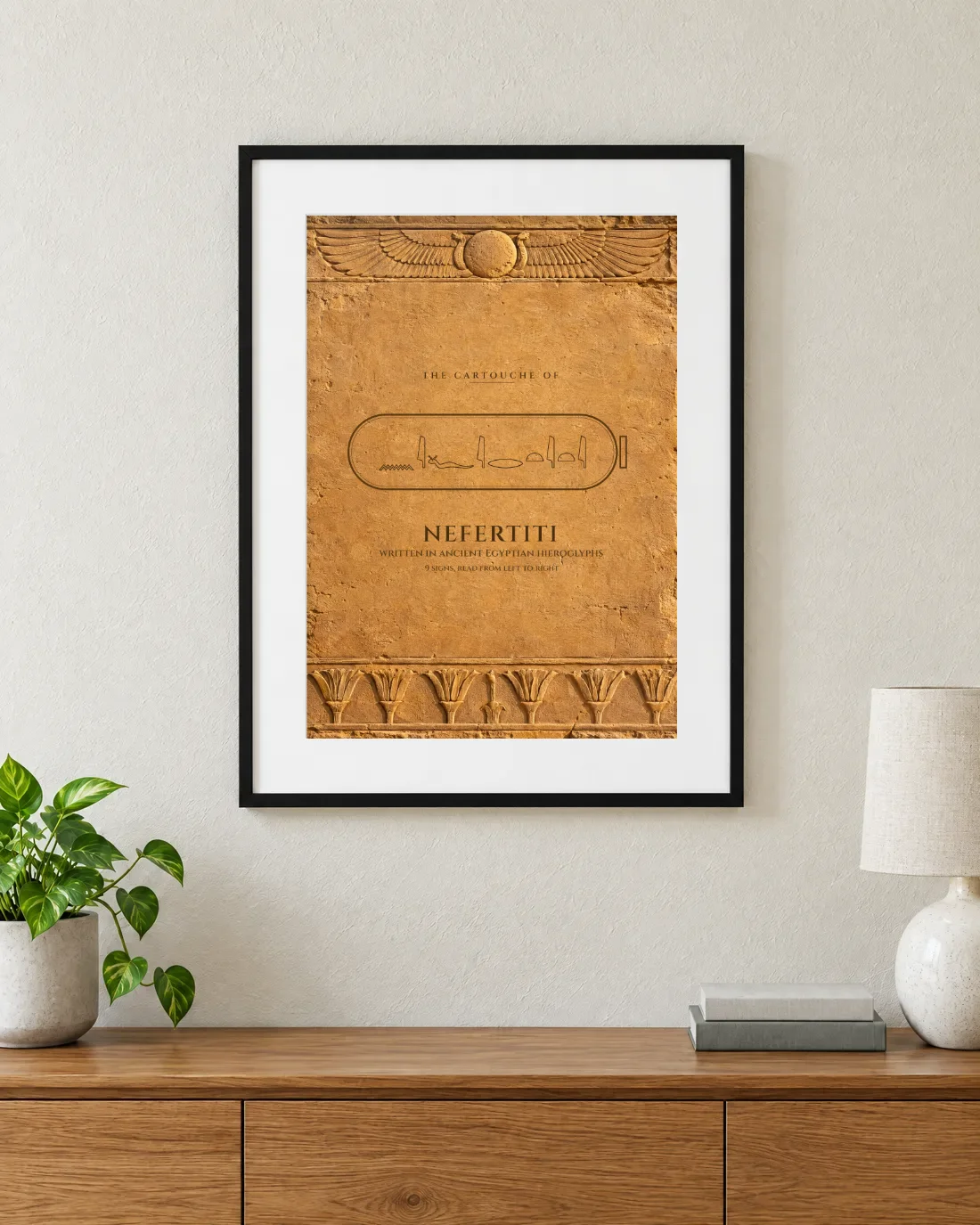
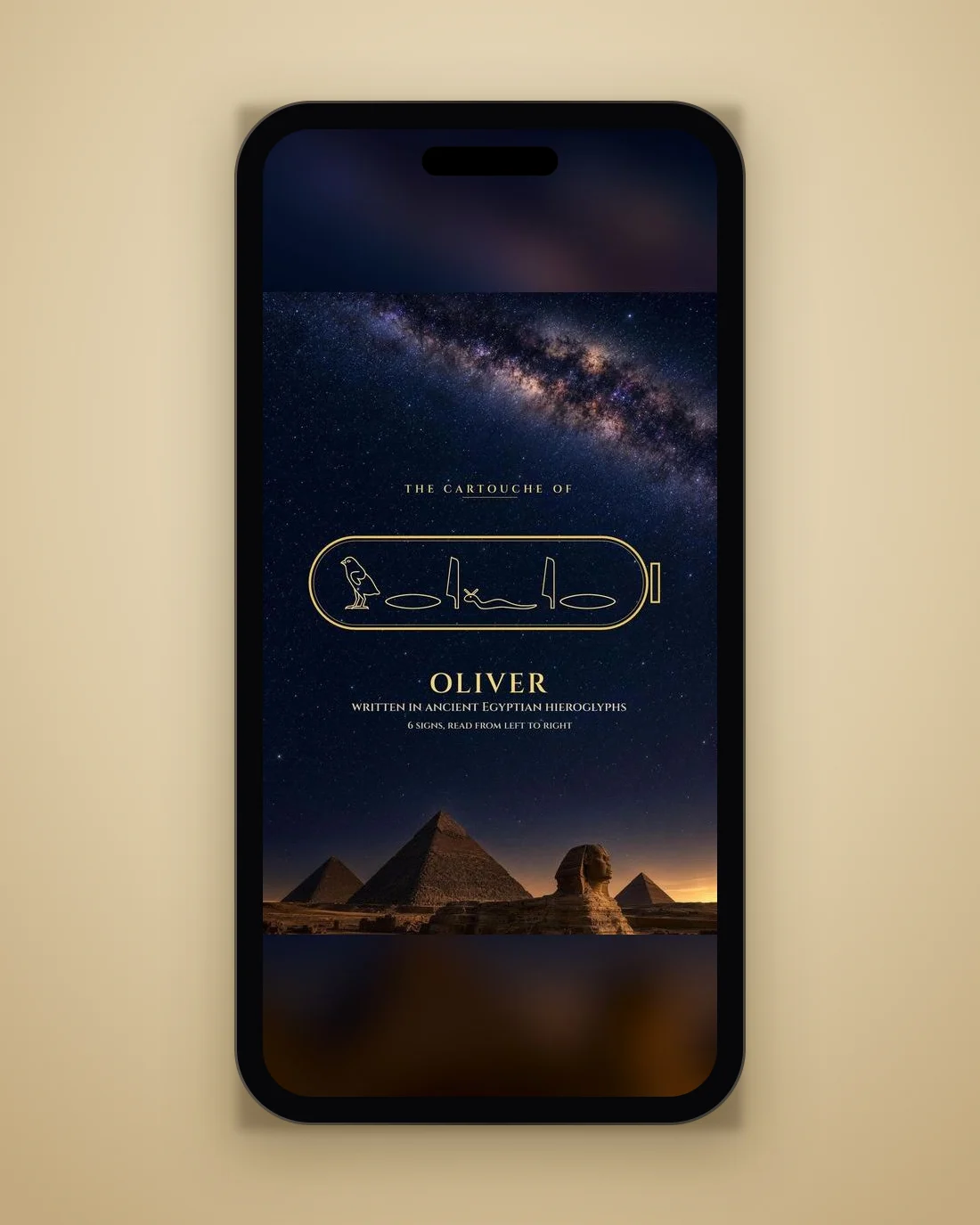
Their name in hieroglyphs, to keep
Prints for the wall, framed names, pictures by email and the course as a gift. Postage included, 14-day guarantee.
Visit the Store