Write Your Name in Cuneiform
Type your name and see it in Babylonian cuneiform, the wedge-shaped writing of ancient Iraq, written syllable by syllable the way a scribe would have.
Name marker
𒄩𒊑
ḫa-ri
- 𒄩ḫa
- 𒊑ri
Read left to right, the way Babylonian scribes wrote on clay.
The same name in Egyptian hieroglyphs: 𓉔𓄿𓂋𓇋
See it in a cartoucheQuick answer
Cuneiform is a writing system, not a language: wedge-shaped marks pressed into clay with a reed, invented in Sumer (southern Iraq) around 3400 to 3200 BCE and used for some 3,000 years to write Sumerian, Akkadian, Hittite and other languages. It and Egyptian hieroglyphs are the two oldest writing systems in the world. Cuneiform's sound signs stand for syllables, so a name is written syllable by syllable: Harry is ḫa-ri, 𒄩𒊑.
How the converter writes your name
- Your spelling becomes Babylonian sounds. Akkadian had four vowels, a, e, i and u, and no o, f, v, j or th. So o is written u, f as p, v as b, j as y and th as t. An h becomes ḫ, the rough “ch” of Scottish “loch”, and sh is š.
- The sounds are split into syllables. A consonant and its vowel make one sign (ḫa, ri). A consonant that closes a syllable joins the vowel before it (ak, in), and a consonant left on its own gets a helper vowel, as scribes did.
- Each syllable gets its sign. One sign can have several readings, so you will see a syllable written with a sign named for another: pi with the BI sign, wa with PI, ši with IGI (“eye”). That is real cuneiform, not a mistake.
- A marker, if you want one. Scribes put a silent sign before a personal name: a single upright wedge 𒁹 for a man, the sign for “woman” 𒊩 for a woman. Scholars write them as a raised ᵐ and ᶠ.
No modern name had an ancient spelling, so the result is one good way to write yours, not the only one. Spell the name the way it sounds (Mikel for Michael, Shawn for Sean) and the converter does better.
Names in cuneiform
𒀀𒈾
𒅀𒀝
𒋢𒁉
𒌅𒈠𒊍
𒌋𒇷𒁉𒀀
𒄩𒈬𒊏𒁉
Hammurabi's own scribes usually wrote his name with a doubled m, ḫa-am-mu-ra-bi: doubled consonants were spelled out in Akkadian. The converter writes a double letter once, because English spells many sounds double that are said once.
Cuneiform and Egyptian hieroglyphs
Cuneiform and hieroglyphs were invented within a century or two of each other, some 1,500 kilometres apart, and they are the two oldest writing systems we know. Whether Egypt took the idea of writing from Mesopotamia is still argued. The signs, the materials and the way the two systems work are each their own, and since the early labels from Abydos were dated to about 3250 BCE most Egyptologists see two separate inventions.
| Cuneiform | Hieroglyphs | |
|---|---|---|
| First written | c. 3400–3200 BCE, Uruk (Iraq) | c. 3250 BCE, Abydos (Egypt) |
| Written on | Clay, pressed with a reed stylus | Stone, wood and papyrus, carved or painted |
| Sound signs stand for | Syllables with their vowels (ba, ri, ak) | Consonants only, no vowels (n, ḥ, nfr) |
| Signs in use | About 600 | About 700 in Middle Egyptian |
| Word signs and classifiers | Yes; classifiers usually before the word | Yes; classifiers after the word |
| Languages written | Sumerian, Akkadian, Hittite and a dozen more | Egyptian only |
| Direction | Left to right | Usually right to left, any direction |
| Last use | c. 75 CE, an astronomical tablet | 394 CE, at the temple of Philae |
| Deciphered | 1850s, from the Behistun inscription | 1822, from the Rosetta Stone |
Built the same way
Both mix three kinds of sign: signs for whole words, signs for sounds, and silent classifiers that tell the reader what kind of thing a word is. Egyptian puts the classifier after the word, as the seated man 𓀀 after a man's name; cuneiform usually puts it first, as the star 𒀭 before a god's name and the wedge 𒁹 before a man's. The big difference is the sound signs. Hieroglyphs have 25 signs for single consonants and write no vowels; cuneiform has no single consonants at all, only syllables, with their vowels. That is why your name is a handful of letters in hieroglyphs and a handful of syllables in cuneiform.
Where they met
In the 14th century BCE the pharaohs wrote to the other great kings in cuneiform. The Amarna letters, about 380 clay tablets found at Akhenaten's capital, are their correspondence with Babylon, Assyria, Mitanni and the Hittites, written in Akkadian, the diplomatic language of the age. Egyptian scribes learned cuneiform to read them, and practised on Babylonian myths. A century later, around 1259 BCE, Ramesses II and the Hittite king Hattusili III made the earliest peace treaty whose text survives on both sides: the Hittite copy in Akkadian cuneiform on clay, the Egyptian one in hieroglyphs on the walls of Karnak and the Ramesseum.
How both were read again
Both scripts were forgotten, and both came back through an inscription in several scripts. The Rosetta Stone gave Champollion hieroglyphs in 1822. For cuneiform it was the cliff inscription of the Persian king Darius I at Behistun, in Old Persian, Elamite and Babylonian, copied by Henry Rawlinson. In 1857 four scholars were sent the same newly found Assyrian text to translate separately; their versions agreed, and cuneiform was accepted as read. Read the whole story in cuneiform vs. hieroglyphs: the world's two oldest scripts.
Read the other oldest script
Learn Hieroglyphics teaches you to read Egyptian hieroglyphs from scratch. The first lesson is free to start: your own name on a sealed door, then your first real Egyptian words.
Start Lesson 1 freeFrequently asked questions
Is cuneiform the oldest writing in the world?
It is one of the two oldest. The first cuneiform tablets come from Uruk in southern Iraq and date to about 3400 to 3200 BCE; the first Egyptian hieroglyphs, on labels from tomb U-j at Abydos, date to about 3250 BCE. The dates overlap, so scholars still debate which came first. Writing was later invented separately in China and in Mesoamerica.
Is cuneiform a language?
No, it is a script: a way of writing, like the Latin alphabet. Over three thousand years it was used for more than a dozen languages, among them Sumerian, Akkadian (the language of Babylon and Assyria), Hittite, Elamite, Hurrian and Urartian, and Old Persian used a simplified cuneiform of its own. This converter writes names the way Old Babylonian scribes wrote Akkadian, in the time of Hammurabi.
Is Sumerian the oldest language?
Sumerian is one of the two oldest written languages, with Egyptian. Nobody can say which spoken language is the oldest, because speech leaves no trace before writing. Sumerian is also a language isolate: it has no known relatives, living or dead.
How do you write a name in cuneiform?
Syllable by syllable. Cuneiform has no alphabet; its sound signs stand for syllables such as ba, ri or ak. Babylonian scribes wrote foreign names by sound, so a name is split into syllables and each gets its sign: Harry is ḫa-ri, 𒄩𒊑. A scribe would usually add a silent marker before a personal name, a single upright wedge for a man and the sign for 'woman' for a woman.
How accurate is the cuneiform name converter?
It follows the rules a scribe would: Akkadian has four vowels (a, e, i, u) and no o, f, v or j, so o is written u, f as p, v as b and j as y. The signs and their readings come from the standard sign lists for Old Babylonian. But a modern name never had an ancient spelling, so treat the result as one good way to write it, not the only one. Spell the name the way it sounds (Mikel for Michael) for the best result.
Did the ancient Egyptians use cuneiform?
Yes, for foreign affairs. The Amarna letters, about 380 clay tablets found at Akhenaten's capital in Egypt, are the letters between the pharaohs and the kings of Babylon, Assyria, Mitanni and the Hittites, and the rulers of Canaan, written in Akkadian cuneiform, the diplomatic language of the time. Scribes in Egypt trained to read and write it, practising on Babylonian myths.
How many cuneiform signs are there?
Around 600 were in common use at any one time, and about a thousand are known overall. A Babylonian scribe writing letters managed with a core of roughly 200. Each sign could have several readings, as a syllable, a whole word, or a silent classifier, so reading cuneiform means knowing which reading fits.
Which way is cuneiform read?
Left to right, in lines across the tablet. The earliest tablets were written in columns from top to bottom, and the whole script was later turned on its side, which is why the oldest signs look rotated a quarter turn compared with later ones.
Can I copy and paste cuneiform?
Yes. Cuneiform has been in Unicode since 2006, so the Copy button gives you text you can paste anywhere. If the signs show as empty boxes, the device has no cuneiform font; the free Noto Sans Cuneiform font fixes that, and Windows has one built in (Segoe UI Historic).
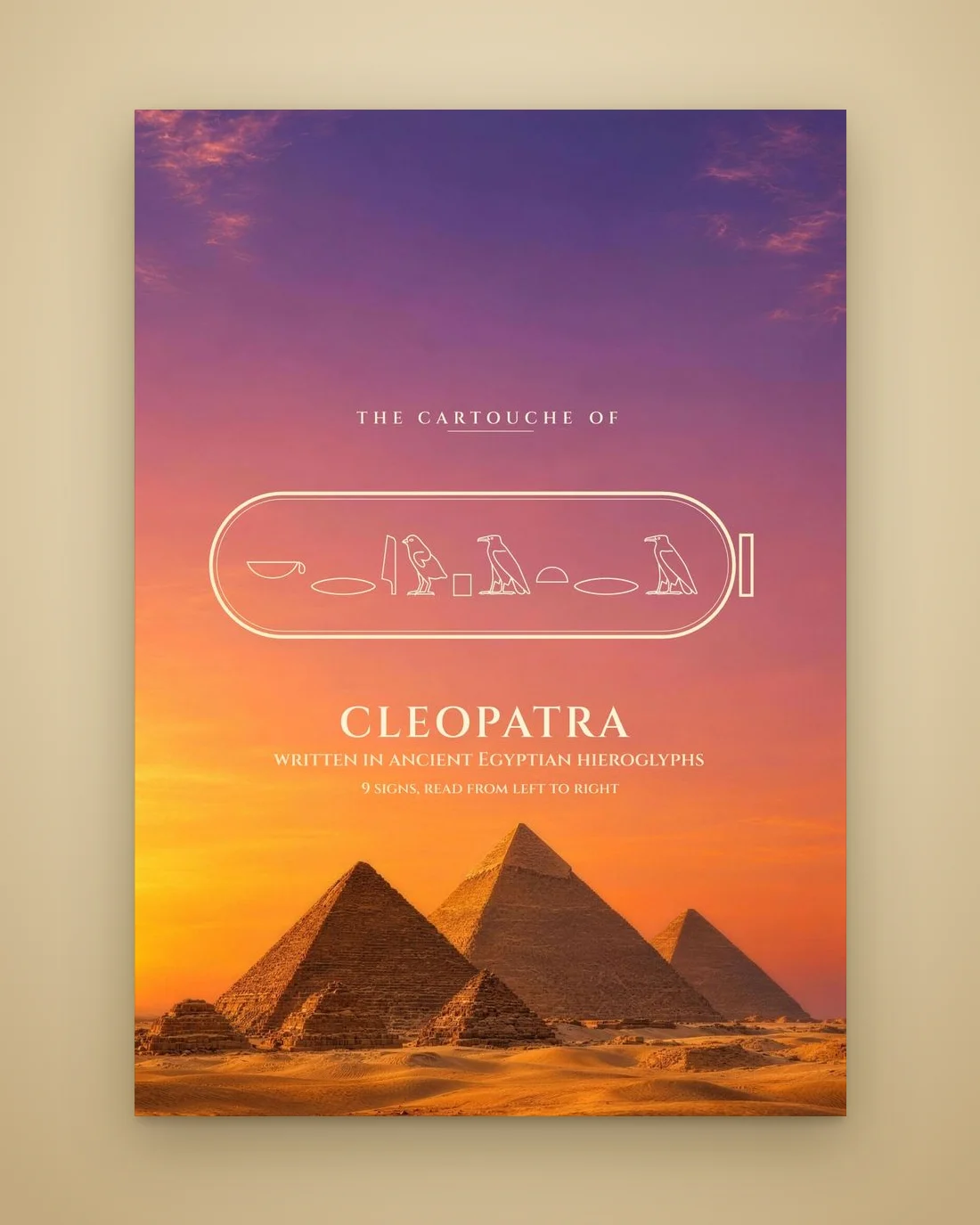
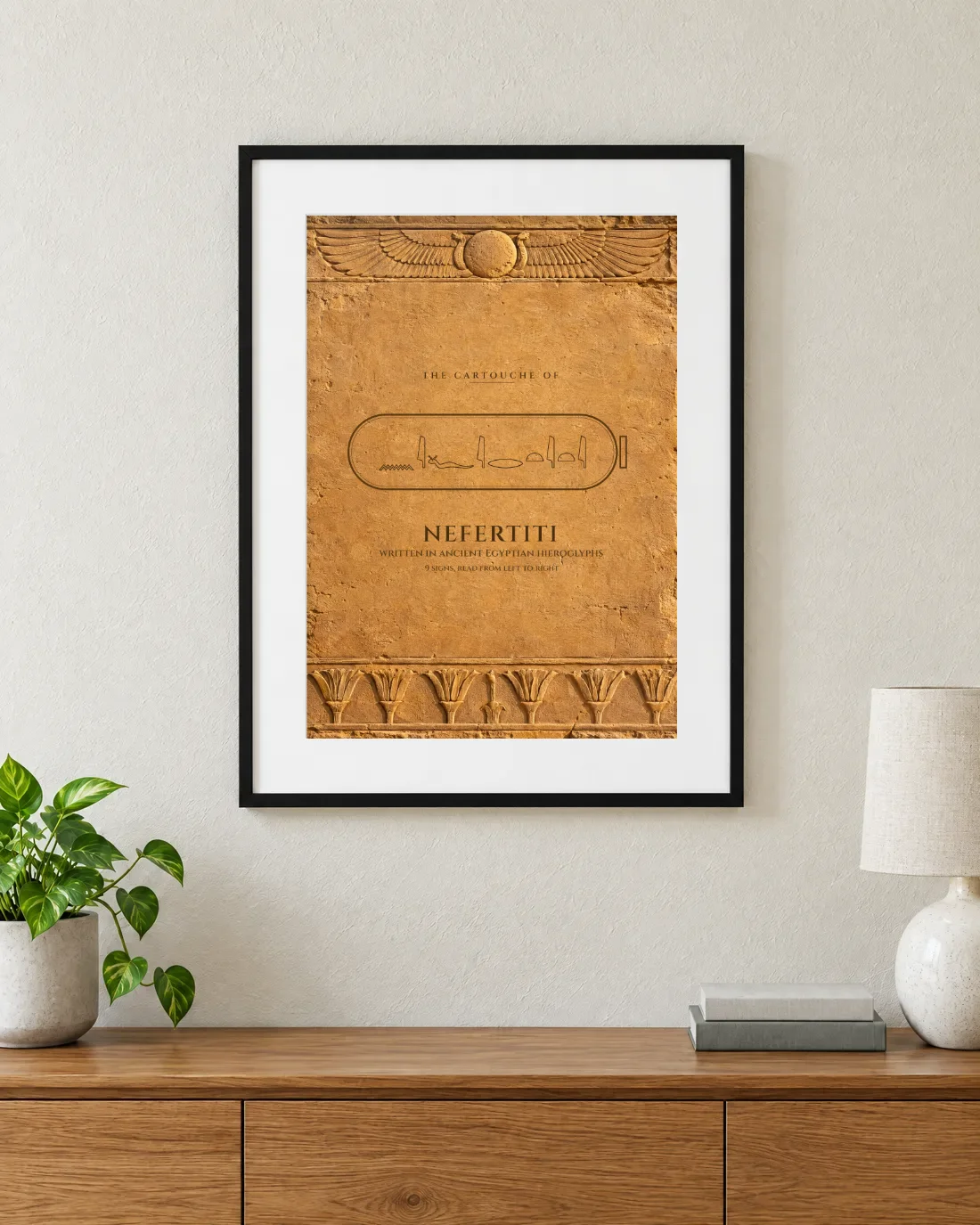
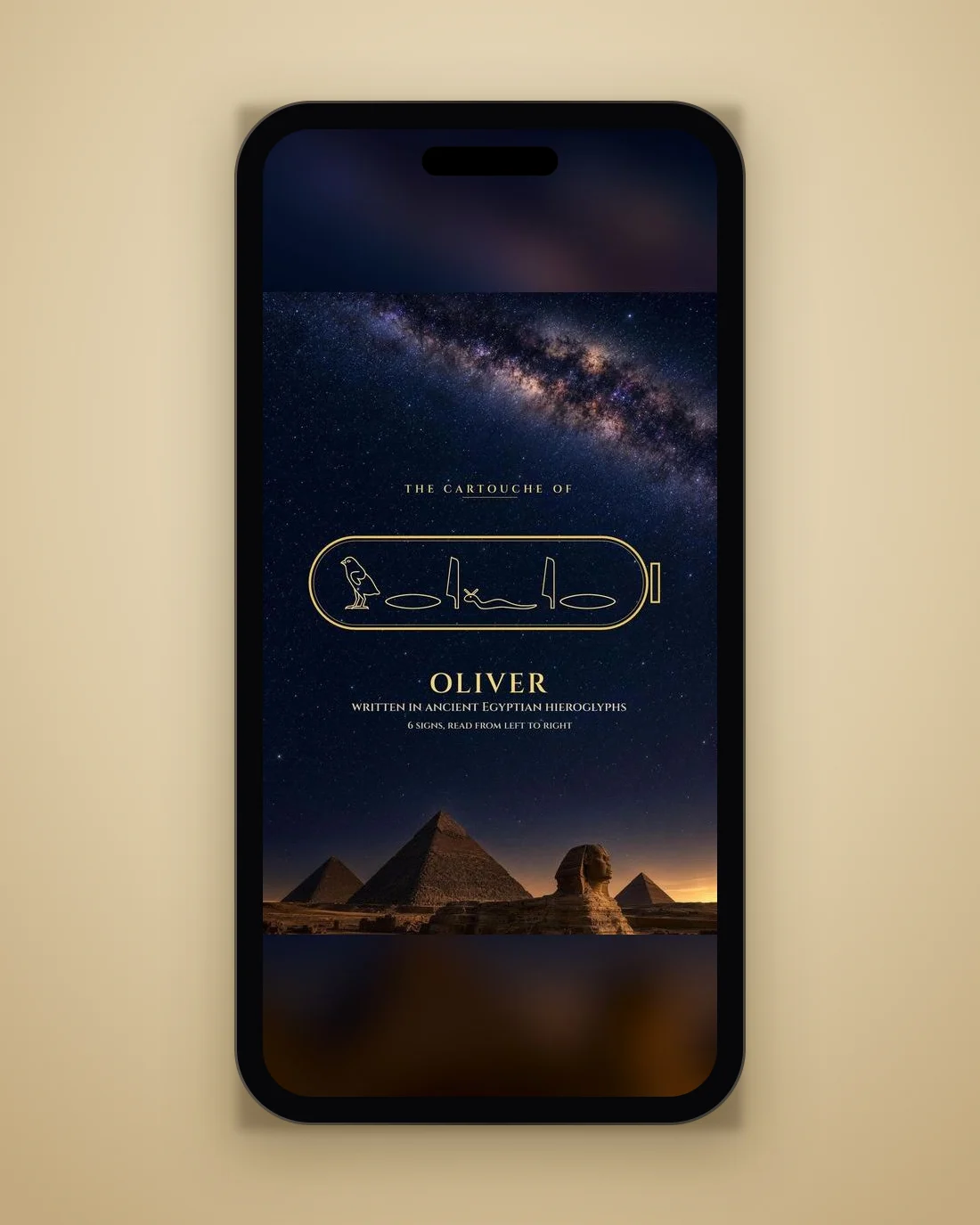
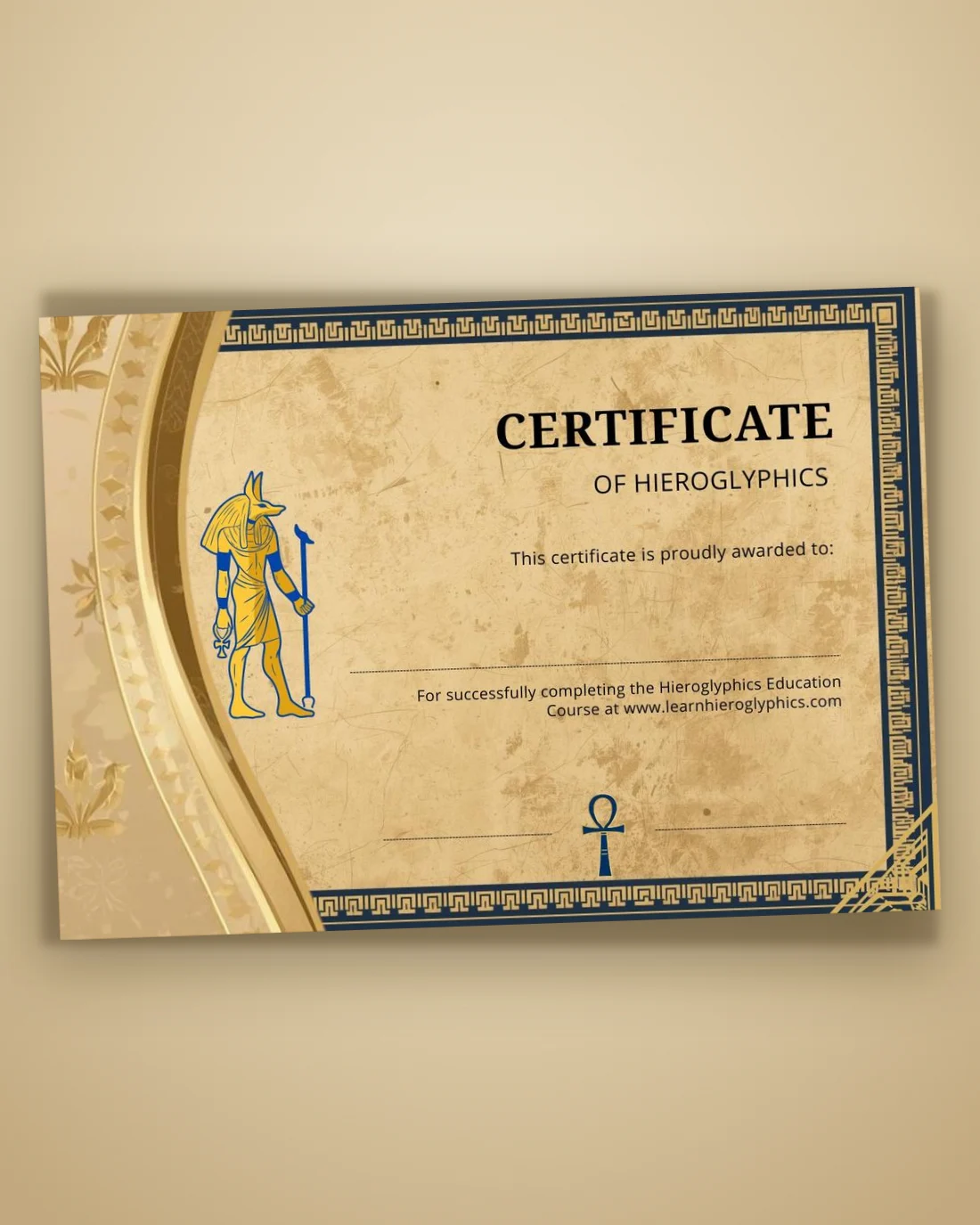
The Store
Their name in hieroglyphs, to keep
Prints for the wall, framed names, pictures by email and the course as a gift. Postage included, 14-day guarantee.
Visit the Store