What Is a Cartouche Necklace? Meaning, History and How to Read One
A cartouche necklace carries a name written in hieroglyphs inside the oval rope Egyptians drew around a pharaoh's name. What the oval means, where the idea comes from, how to read the signs on one, and how to choose your own.
Quick answer
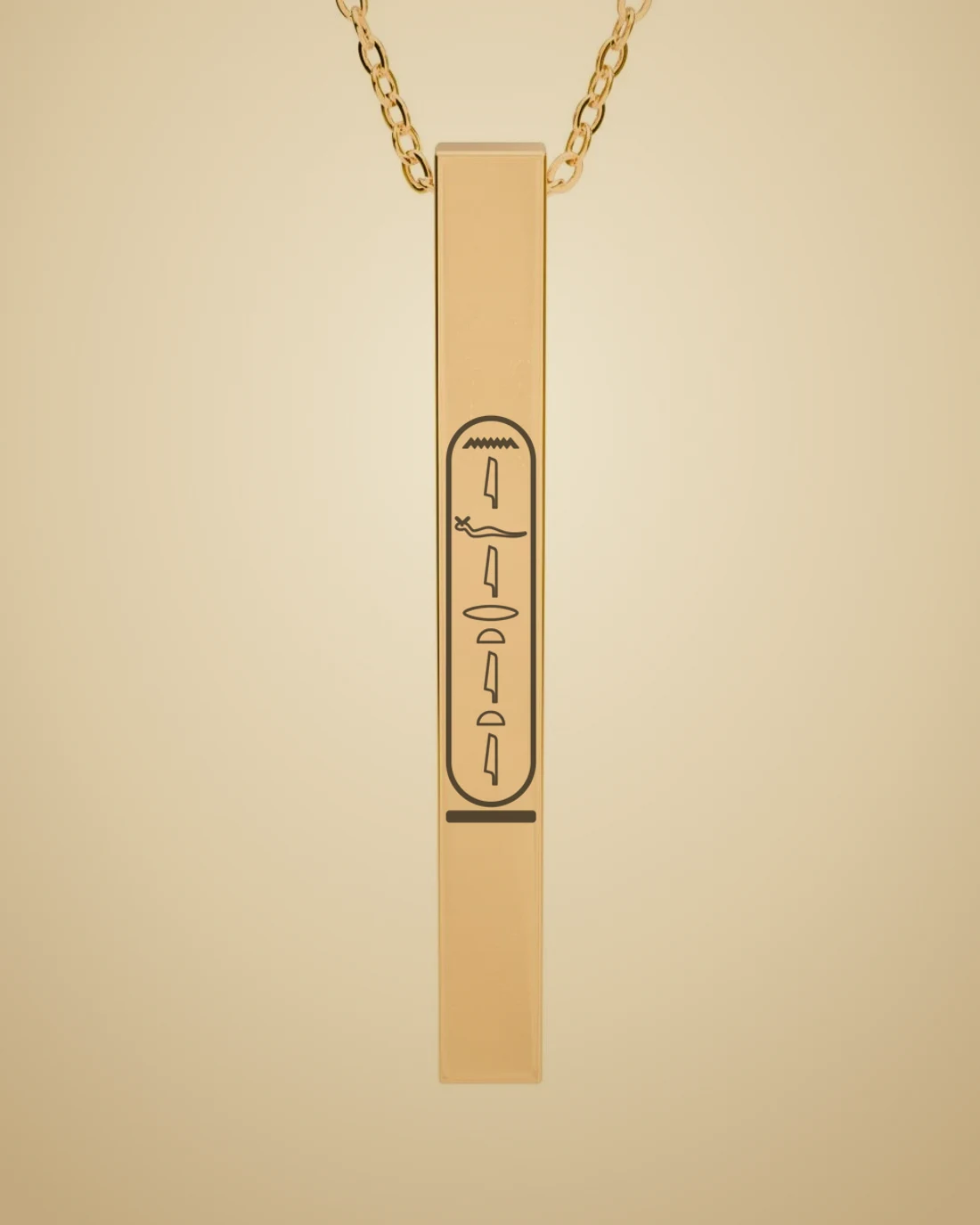
A cartouche necklace is a pendant engraved with a name written in Egyptian hieroglyphs inside a cartouche, the oval rope loop Egyptians drew around the name of a king or queen. The oval stood for protection and for eternity, so wearing your name in one is a wish, in the pharaohs' own terms, that it lasts forever. The name is spelt by sound, one hieroglyph per sound, the way scribes wrote foreign names like Cleopatra.
Want to read this for yourself? Start the first lesson: the 25-sign hieroglyphic alphabet in about 25 minutes. Free to start with a Google or email sign-in.
What a Cartouche Is
A cartouche is the oval loop that surrounds a royal name in Egyptian hieroglyphs. Look closely at one carved on a temple wall and you can see it is a rope: a loop with its two ends tied off at one side, which is why there is a short bar at one end. The Egyptians called it shenu, from the word for "to encircle".
The cartouche is a stretched form of the shen ring, a circle of rope that stood for eternity and protection. Drawing it around a king's name put the name, and the king, inside a loop that would never end. Royal names were written this way from the Old Kingdom, around 2600 BC, to the Roman emperors three thousand years later. The French word cartouche (a cartridge, for its shape) came from Napoleon's soldiers.
Try it as you read: write your own name in hieroglyphs with the free translator, or start the first lesson free and uncover your name on a sealed door.
What a Cartouche Necklace Means
A cartouche necklace takes that oval and puts your name inside it. It says three things at once:
- •This name matters. In ancient Egypt only royal names were set apart in a cartouche.
- •It is protected. The rope loop was meant to guard what it enclosed.
- •It lasts. The shen ring behind it was the sign for eternity.
That is why cartouche pendants became the classic souvenir of Egypt: the jewellers of Cairo's Khan el-Khalili market have been engraving visitors' names in silver and gold cartouches for generations.
How to Read One
- •Find the start. On a vertical pendant, read top to bottom. On a horizontal one, start from the side the birds and people face: if the owl looks left, read from the left.
- •Read each sign as a sound. A name is spelt with the hieroglyphic alphabet: the owl is m, the water ripple n, the mouth r, the reed leaf i or e, the quail chick w or u. Our hieroglyphic alphabet chart has all of them.
- •Ignore the knot. The short bar at the end of the loop is the rope's tie, not a letter.
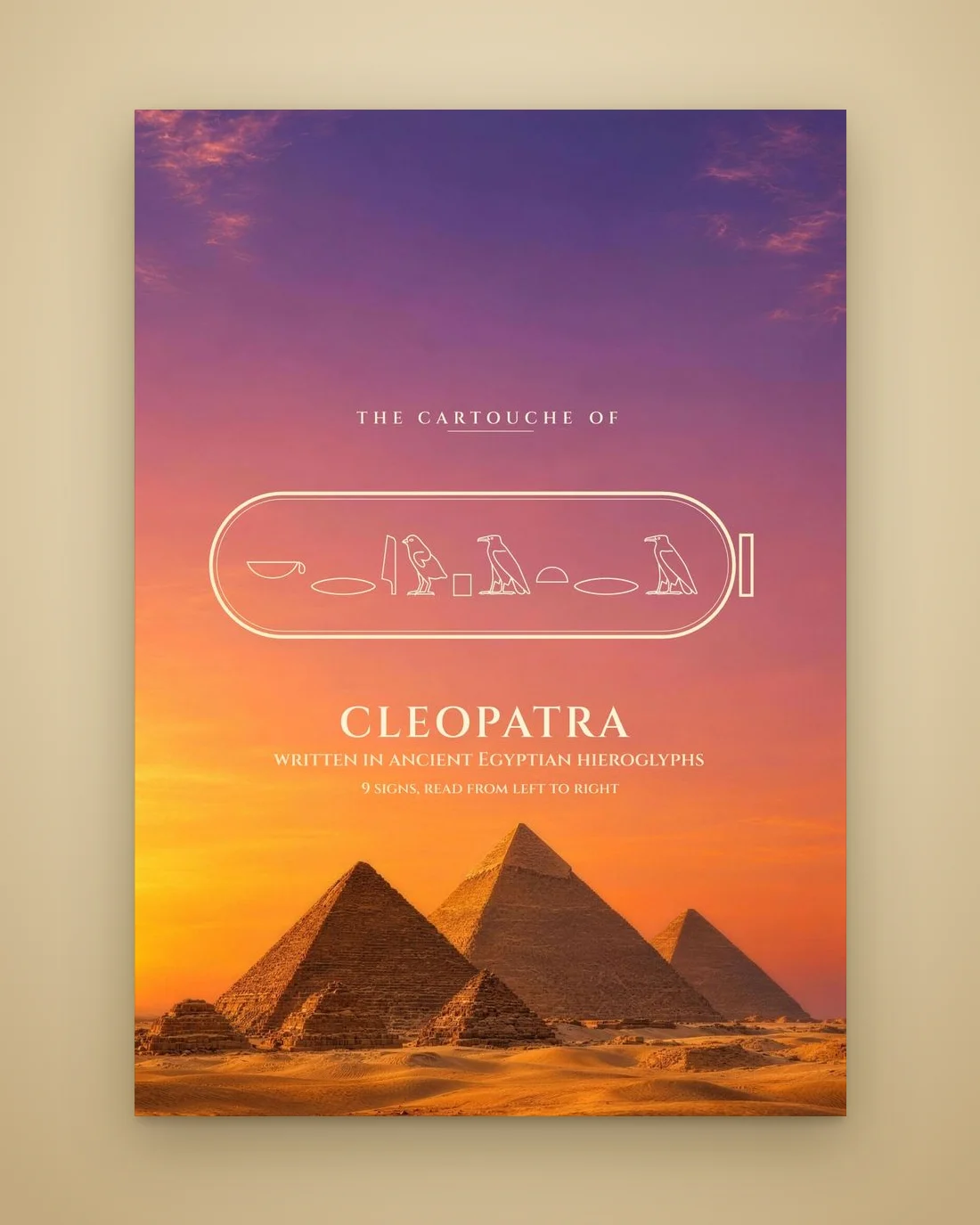
Try it on Cleopatra's own cartouche in our guide to reading your first cartouche.
How a Name Is Spelt in Hieroglyphs
Egyptian had no letters for English names, so a modern name is written the way scribes wrote Greek ones: by sound. Each sound gets its alphabet sign, silent letters are dropped and a double letter is written once, so Anna has one n. A good cartouche comes with the spelling shown sign by sign, so the wearer can read their own name back.
You can see any name written before you buy anything: type it into the hieroglyphics name translator.
Choosing a Cartouche Necklace (or Ring)
Each of these is laser-engraved into gold-plated steel, so it never rubs off, shows you the engraving before you order, and comes in a gift box (they ship to the US and the UK):
- •Cartouche name necklace: the classic form, the signs running top to bottom down a slim bar. Gold-plated or stainless steel.
- •Name dog tag: an upright cartouche with the name in capitals beneath it, so everyone can read it. Good for long names.
- •Cartouche signet ring: the name on the face of a signet ring, as pharaohs pressed theirs into clay. Best for names of up to five signs.
- •Stone bead bracelet: the cartouche lying down along a gold bar, on turquoise, lapis-blue sodalite or onyx.
- •Name cuff bracelet: an open gold cuff with the cartouche across the front.
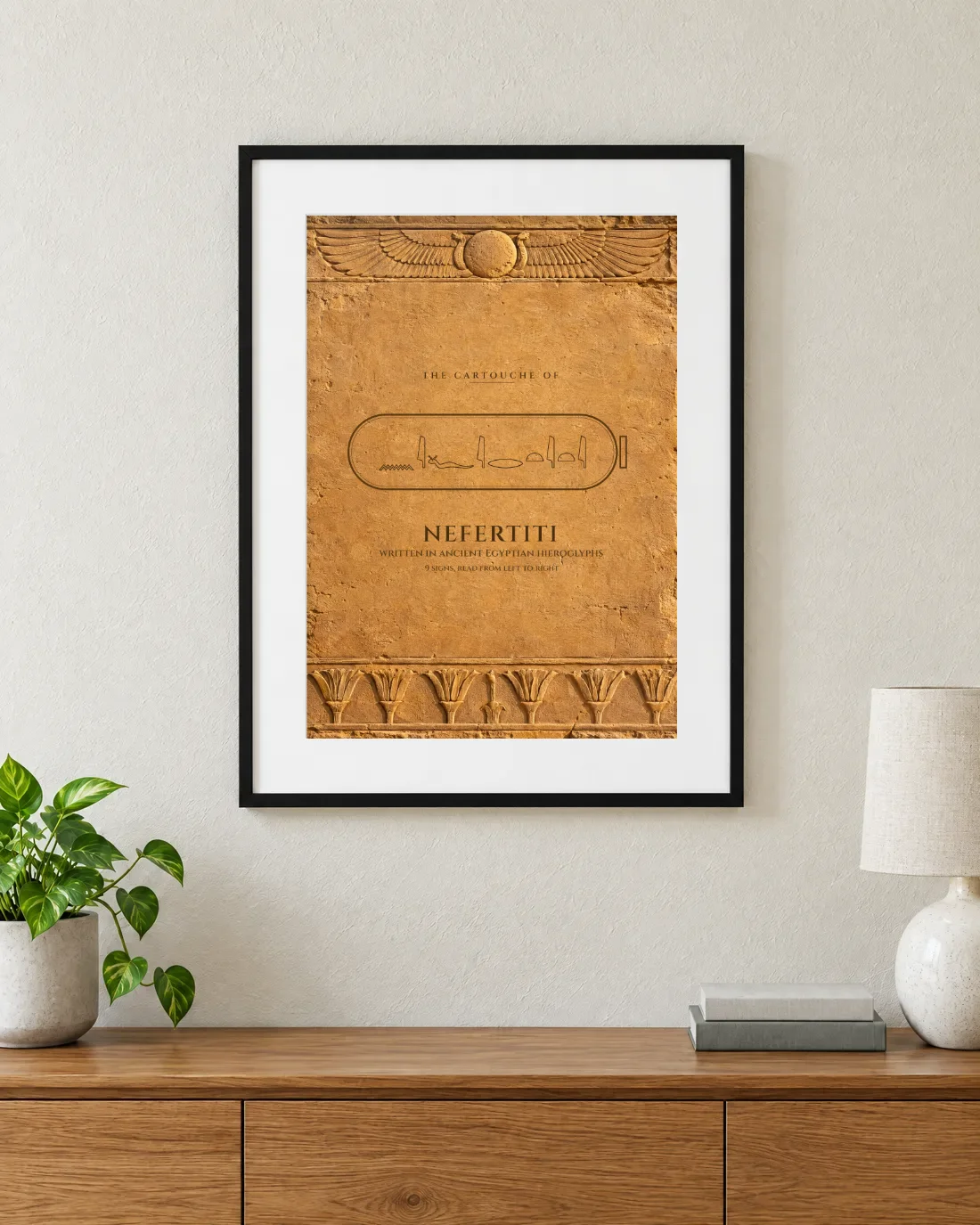
Which to choose: the necklace for a classic gift, the dog tag for a long name or a man's gift, the ring for a short name, a bracelet for someone who already wears a necklace every day. For the wall instead, the same cartouche comes as a name print, and every gift is on the hieroglyphics gifts page.
A Note on Accuracy
A cartouche necklace can only be as good as its spelling. Be wary of pendants that "translate" a name into a meaning, or that use one sign per English letter, including silent ones: that is not how Egyptian worked. A name spelt by sound, with a key, is one an Egyptologist would recognise.
Frequently Asked Questions
Related Articles
Egyptian Cartouches: Meaning, Royal Names and How to Read One
How to read a royal cartouche step by step: find the reading direction, spot honorific transposition, then sound out Tutankhamun, Cleopatra and Ramesses II.
Gifts for Someone Who Loves Ancient Egypt: 11 Ideas for Christmas
Personal, clever and not another pyramid ornament: eleven gifts for the Egypt lover in your life, from their name engraved in hieroglyphs on gold jewellery to the book that teaches them to read a temple wall.
Cleopatra's Cartouche Explained, Sign by Sign
Cleopatra's name is spelled out sound by sound in eleven hieroglyphs. Here is what each sign is, why it ends with an egg, and how her cartouche helped Champollion crack the code.
Ready to read hieroglyphics yourself?
Your first lesson starts with your own name: brush the sand off a sealed door and read it in hieroglyphs, then learn the rest of the alphabet through real Egyptian words.
Start Lesson 1 FreeNo sign-up to start, no payment. Lifetime access to all eight lessons is one payment later, if you want it.
The Store
Their name in hieroglyphs, to keep
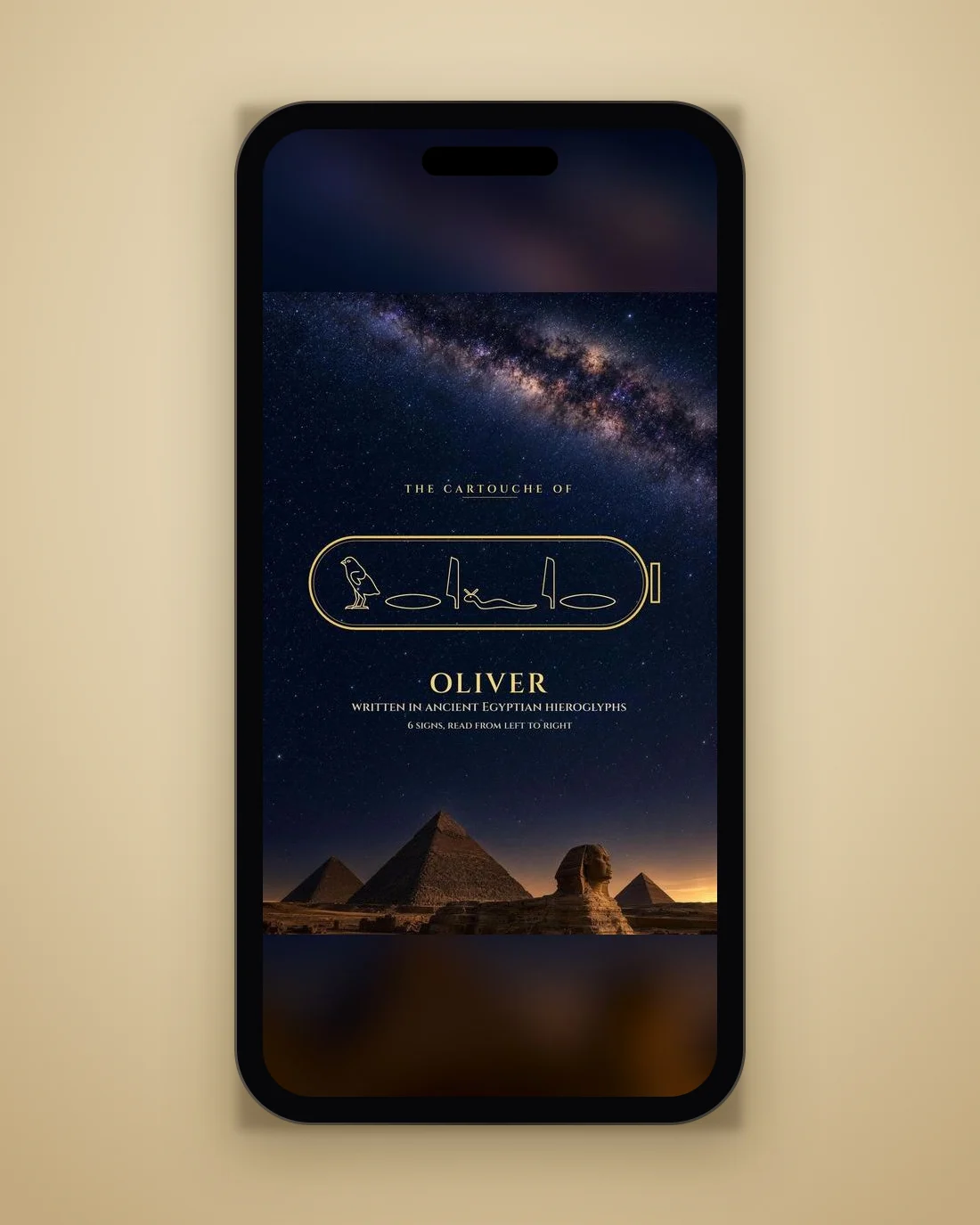
Prints for the wall, framed names, pictures by email and the course as a gift. Postage included, 14-day guarantee.
Visit the Store