Hieroglyph meaning
𓋹Ankh meaning: the sign of life
By Harry Harrison · Published · Updated
Quick answer
𓋹 is the ankh, the ancient Egyptian hieroglyph for ꜥnḫ, "life" and "to live". In temple scenes gods hold it to the king's nose to give him the breath of life, and it ends royal names in the phrase "given life". The shape probably shows a sandal strap, whose Egyptian name sounded the same, and Egyptian Christians later took it up as the crux ansata, a form of the cross.
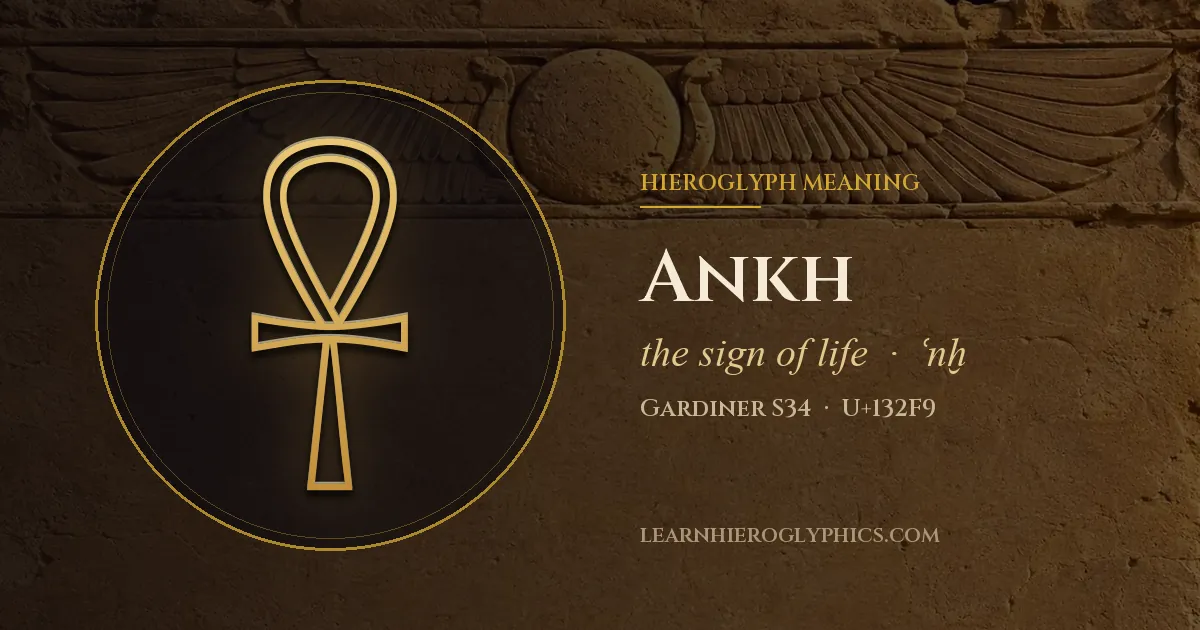
- Unicode
- U+132F9 (EGYPTIAN HIEROGLYPH S034)
- Gardiner sign
- S34, sandal strap
- Transliteration
- ꜥnḫ
- Said
- “ankh”
- How it was read
- A three-consonant sign spelling ꜥ-n-ḫ, and a word-sign for ꜥnḫ "life" and "to live".
What does 𓋹 depict?
A loop on top of a T-shaped cross. Nobody knows for certain what object it shows. Gardiner's sign list, where it is S34 among crowns, clothing and staffs, calls it a sandal strap, and the Egyptian word for a sandal strap was also ꜥnḫ. Because scribes often borrowed the picture of one thing to write another word with the same consonants, this is the most widely accepted explanation.
Other ideas include a knot of cloth or a mirror (also called ꜥnḫ, and Tutankhamun's tomb held a mirror case made in the shape of an ankh). The popular claim that it joins male and female symbols has little support among Egyptologists.
What did the ankh mean?
Life, in a fuller sense than just being alive: life given and kept going by the gods. In temple reliefs a god holds the ankh to the king's nose, giving him the breath of life, and in purification scenes the water poured over the king is drawn as streams of little ankh signs. Under Akhenaten the rays of the sun disc, the Aten, end in hands, and some of them hold ankhs to the faces of the king and Nefertiti.
The sign also wrote the verb "to live" and the word for an oath. It sits in famous names: Tutankhamun is twt-ꜥnḫ-jmn, "living image of Amun", and his queen Ankhesenamun is "she lives for Amun". After a king's name you often read 𓏙𓋹 dj ꜥnḫ, "given life", or ꜥnḫ wḏꜣ snb, "life, prosperity, health".
Find your name on a sealed door
Brush the sand off a buried lintel and read your name in hieroglyphs, then meet the rest of the 25-sign alphabet through real Egyptian words. Three short sections, about ten minutes each.
Where do you see the ankh?
Almost everywhere in Egyptian religious art: in the hands of gods and goddesses, on temple walls, coffins, stelae and royal jewellery, and as amulets, mirrors and votive objects shaped like the sign. It is often grouped with the djed pillar and the was sceptre, the signs for "life, stability and dominion", the blessing most often wished on kings. In the older art it is mostly gods and kings who hold it.
It outlived the old religion. Egyptian Christians, the Copts, used the looped cross as the crux ansata in manuscripts and on textiles from late antiquity, and today the ankh is worn as jewellery, tattooed, and used in fashion and spiritual movements. For its full history, from the sign's earliest uses to the Coptic cross, read our complete guide to the ankh symbol.
Ankh or Isis knot?
The ankh is easy to confuse with the tyet, the "knot of Isis" (Gardiner V39). Both have a loop on top, but the tyet's arms hang down beside a longer, folded lower part, like knotted cloth, while the ankh's arms stick straight out. The tyet was linked with the goddess Isis and protection, and was often carved in red stone.
Two more mix-ups: the ankh is not a letter of the hieroglyphic alphabet, because it stands for three consonants, not one; and it is not a key, though it is often called the "key of life", a modern nickname rather than an ancient one.
How to type or copy 𓋹
𓋹 is a real character, not a picture: Unicode added the Egyptian hieroglyphs in 2009, and this one is U+132F9, EGYPTIAN HIEROGLYPH S034. Press Copy above and it pastes into messages, documents and social posts like any letter. In HTML you can write 𓋹.
If it shows as an empty box, the device has no hieroglyph font: Windows includes Segoe UI Historic, and Noto Sans Egyptian Hieroglyphs is free for everything else. To spell words with sound signs, try the hieroglyphics keyboard.
Frequently asked questions
What does 𓋹 mean?
𓋹 is the ankh, the ancient Egyptian hieroglyph for ꜥnḫ, "life" and "to live". It is Gardiner sign S34 and Unicode U+132F9. In art, gods hold it to the king's nose to give him the breath of life.
Why do gods hold the ankh to the pharaoh's nose?
The gesture means "I give you life": the god passes the breath of life to the king. It showed that the king's life and rule came from the gods, and it is one of the most common scenes on temple walls.
What object is the ankh?
Probably a sandal strap: Gardiner's sign list describes S34 that way, and the Egyptian word for sandal strap, ꜥnḫ, had the same consonants as the word for life. Other theories include a cloth knot or a mirror, but none is certain.
Is the ankh a religious symbol?
In ancient Egypt, yes: it belonged to the gods, the king and the dead, and appears mostly in temples, tombs and royal inscriptions. Egyptian Christians later used it as the crux ansata, a form of the cross. Today it is also worn simply as jewellery or a tattoo.
How do I copy and paste the ankh symbol?
Press Copy on this page, or copy this character: 𓋹. It is Unicode U+132F9, EGYPTIAN HIEROGLYPH S034, and pastes as text. If it shows as a box, install a hieroglyph font such as the free Noto Sans Egyptian Hieroglyphs.
Read the signs around it
Ankh is one sign among hundreds. The quickest way in is the 25-sign alphabet: see your own name written in it, then learn to read it in the first lesson, free to start.
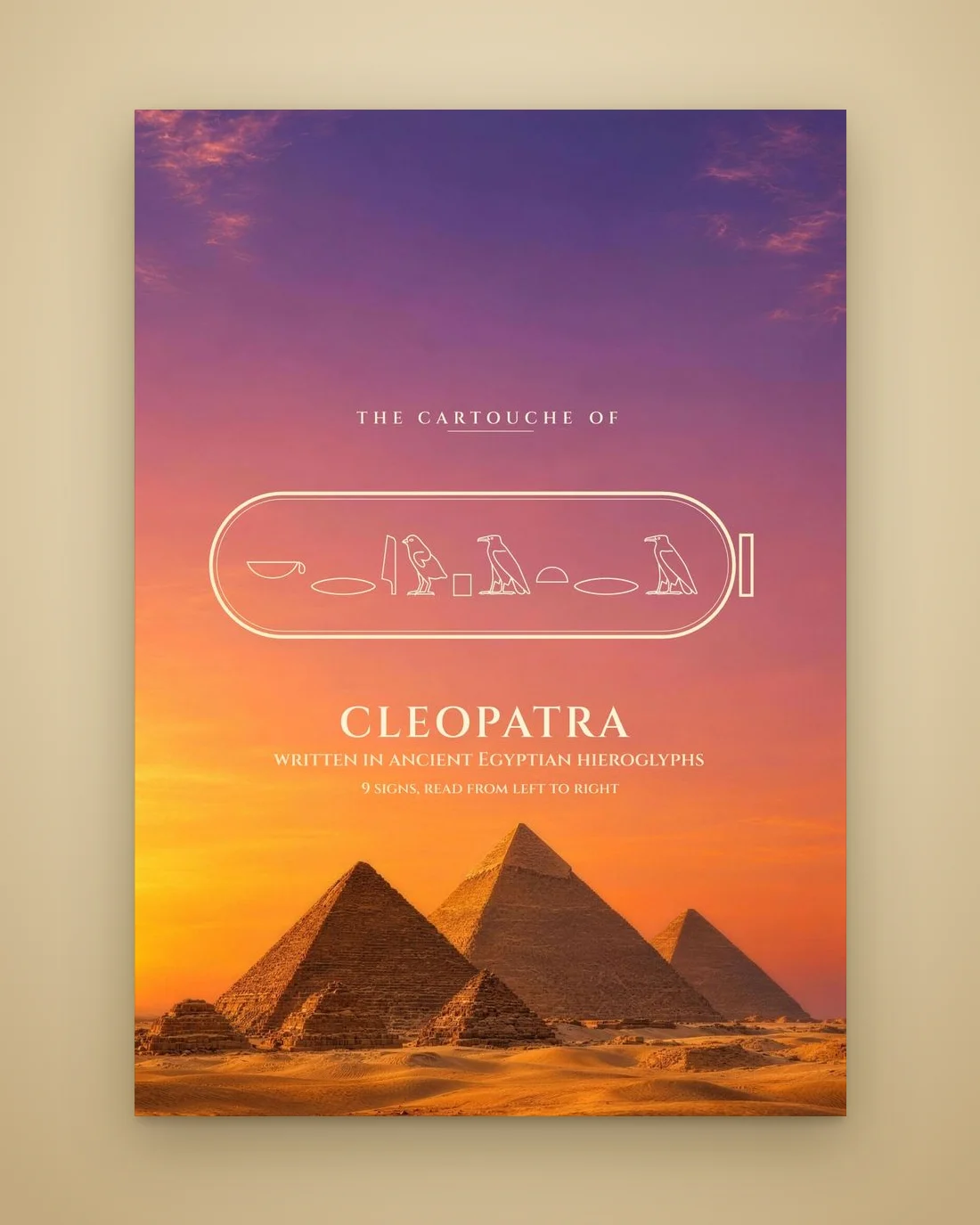
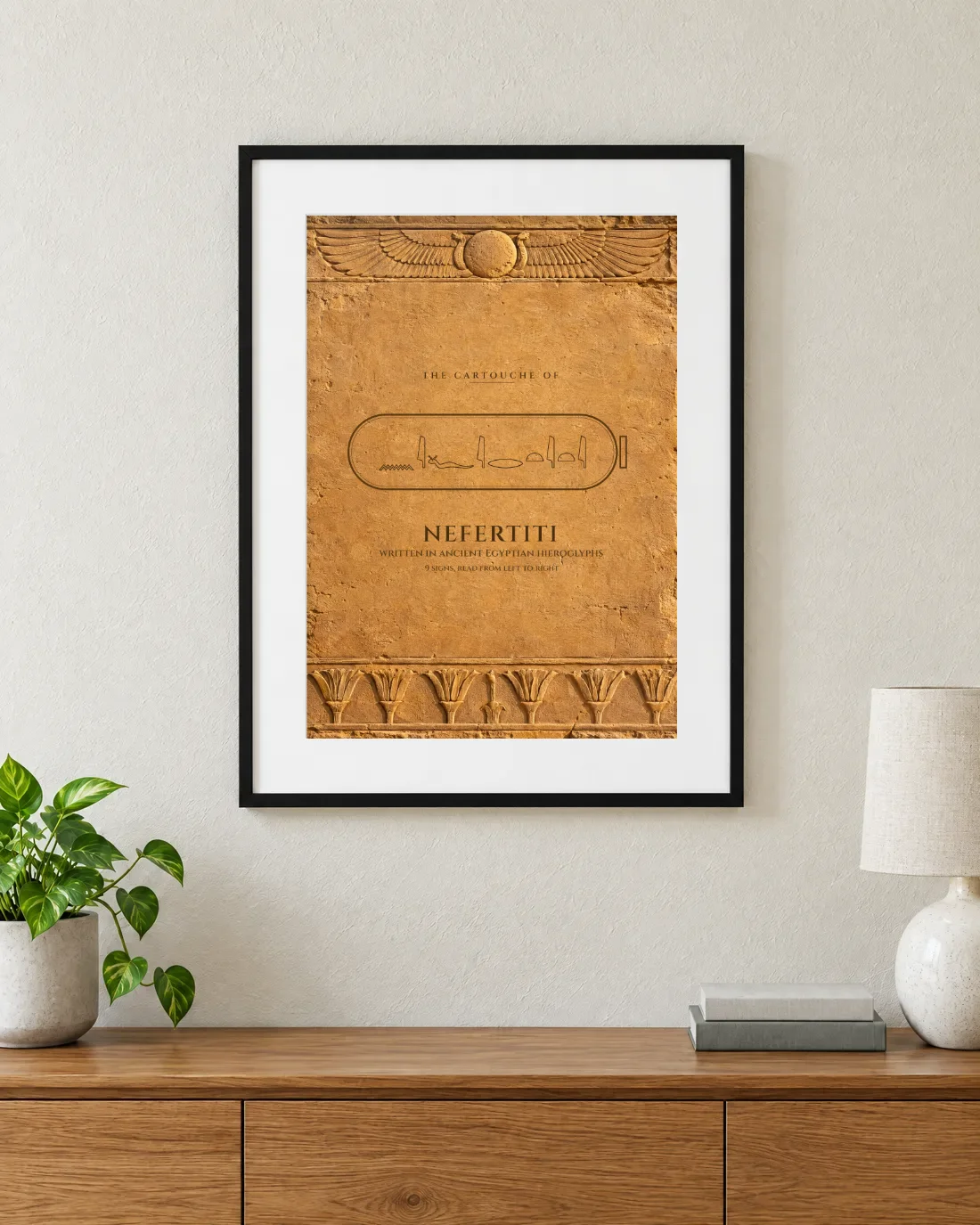
The Store
Their name in hieroglyphs, to keep
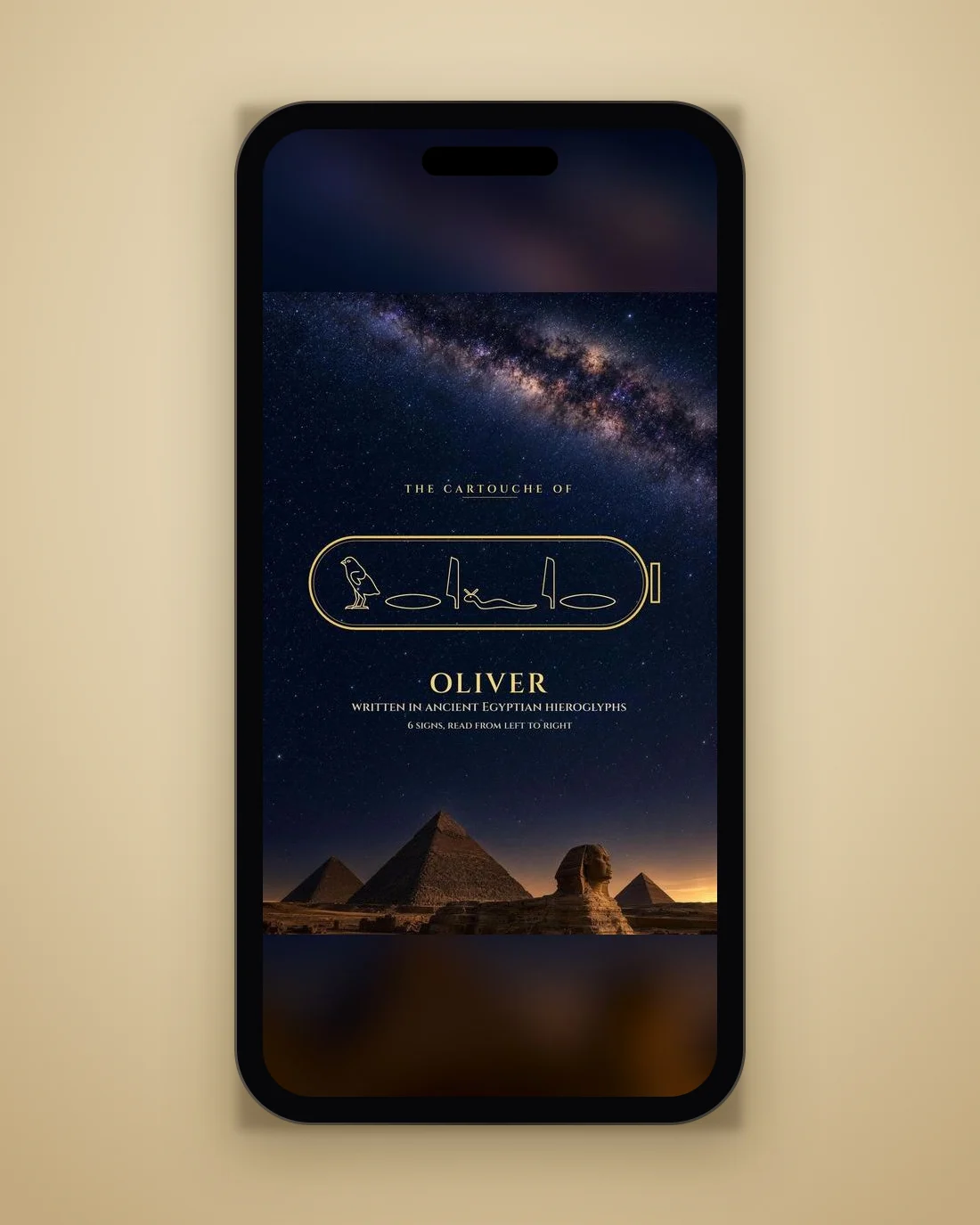
Prints for the wall, framed names, pictures by email and the course as a gift. Postage included, 14-day guarantee.
Visit the Store