Hieroglyph meaning
𓊽Djed pillar meaning: the sign of stability
By Harry Harrison · Published · Updated
Quick answer
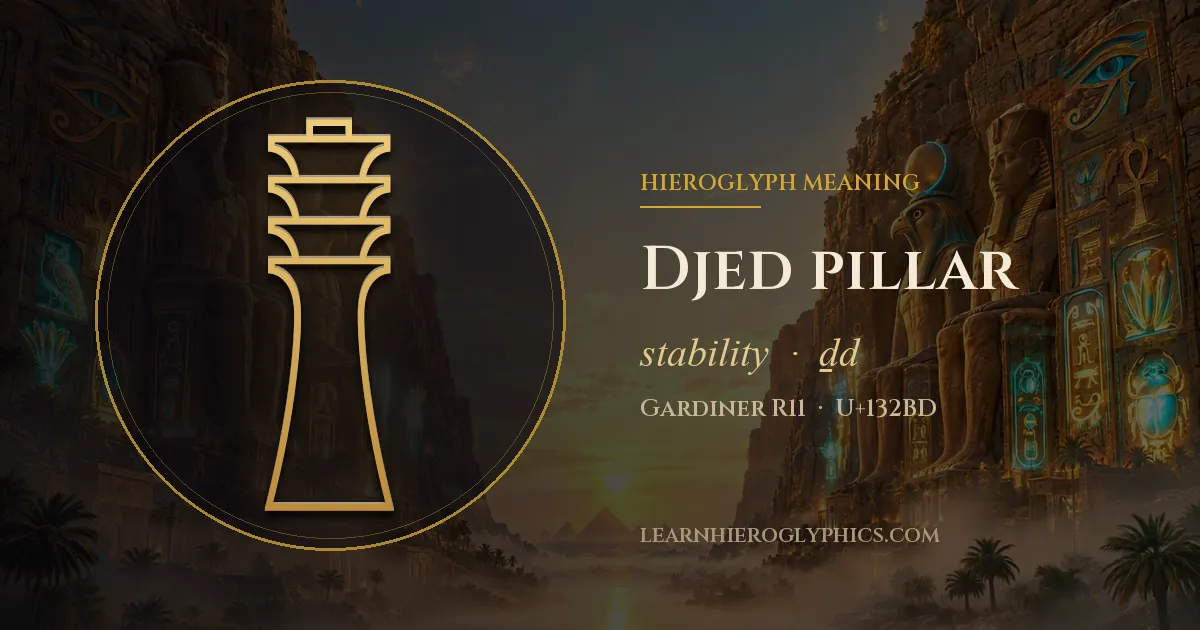
𓊽 is the djed pillar, the ancient Egyptian hieroglyph for ḏd, "stable" or "enduring". From at least the New Kingdom it was identified with the backbone of the god Osiris, so it also stood for his resurrection and for lasting life after death. Kings were wished "life, stability and dominion", written with the ankh, the djed and the was sceptre.
- Unicode
- U+132BD (EGYPTIAN HIEROGLYPH R011)
- Gardiner sign
- R11, djed pillar
- Transliteration
- ḏd
- Said
- “djed”
- How it was read
- A two-consonant sign spelling ḏ-d, used for the word ḏd "stable, enduring" and in the name of Osiris's town Djedu (Busiris).
What does 𓊽 depict?
A pillar with a broad base and four horizontal bars stacked near the top. Nobody is sure what object it started as. Suggestions include a pole with its branches lopped off, a sheaf of grain or bundle of reeds tied at the top, or a stylised tree, and it may have been a fertility or harvest emblem before it was anything else. It is one of the oldest Egyptian symbols, found from the early dynasties onwards.
In Gardiner's list it is R11, among the temple furniture and sacred emblems. In writing it is a biliteral sign, spelling the two consonants ḏ-d, in words such as ḏd "stable, enduring" and ḏdt "stability", and in Ḏdw, Djedu (Greek Busiris), the Delta town that was a centre of the cult of Osiris.
What did the djed mean?
At heart it means stability and permanence: something that stands upright and stays standing. That is why it sits in the royal blessing dj ꜥnḫ ḏd wꜣs, "given life, stability and dominion", written 𓋹𓊽𓌀, one of the most repeated phrases in Egyptian inscriptions.
Early on the djed belonged to the gods of Memphis: Ptah is called "the noble djed", and it was linked with the falcon god Sokar. Over time it was drawn into the story of Osiris, killed by Seth and brought back to life, and by the New Kingdom it was read as Osiris's backbone. A pillar standing upright meant Osiris standing up again: victory over death, and the hope of the same for every dead person.
Find your name on a sealed door
Brush the sand off a buried lintel and read your name in hieroglyphs, then meet the rest of the 25-sign alphabet through real Egyptian words. Three short sections, about ten minutes each.
Raising the djed
The ritual of "raising the djed" (sꜥḥꜥ ḏd) set a large djed upright with ropes. It belonged to the festivals of Osiris and Sokar at the end of the month of Khoiak, and to the king's jubilee. The best-known picture is in the Theban tomb of Kheruef (TT192), where Amenhotep III and Queen Tiye take part, and the temple of Seti I at Abydos shows the king raising one too. Setting the pillar up marked Osiris restored and order (maat) re-established.
Where do you see the djed?
Amulets. Djed amulets of faience, stone and gold were placed on mummies; Book of the Dead Spell 155 is a spell for a golden djed set at the neck of the dead person. Coffins. Many later coffins have a djed painted on the floor of the base, right where the mummy's spine lay. Temples and furniture. Rows of djeds, often alternating with the tyet knot of Isis 𓎬, decorate friezes, shrines and Tutankhamun's furniture.
Djed, ankh or was?
These three appear together so often that people mix them up. The ankh 𓋹 is a cross with a loop on top and means life. The djed 𓊽 is a pillar with four crossbars and means stability. The was sceptre 𓌀 is a tall staff with an animal head at the top and a forked foot, and means dominion or power. On a temple wall a god will often hold all three combined in one staff.
One modern myth to set aside: the claim that djed pillars in the Dendera temple reliefs show ancient electrical insulators. Egyptologists read those scenes, from the Ptolemaic temple of Hathor, as religious imagery of a lotus, a snake and the djed, with matching texts that say so.
How to type or copy 𓊽
𓊽 is a real character, not a picture: Unicode added the Egyptian hieroglyphs in 2009, and this one is U+132BD, EGYPTIAN HIEROGLYPH R011. Press Copy above and it pastes into messages, documents and social posts like any letter. In HTML you can write 𓊽.
If it shows as an empty box, the device has no hieroglyph font: Windows includes Segoe UI Historic, and Noto Sans Egyptian Hieroglyphs is free for everything else. To spell words with sound signs, try the hieroglyphics keyboard.
Frequently asked questions
What does 𓊽 mean?
𓊽 is the djed pillar, Gardiner R11, the Egyptian hieroglyph for ḏd, "stable" or "enduring". It was identified with the backbone of Osiris, so it also meant his resurrection and lasting life after death. It appears in the royal blessing "given life, stability and dominion".
Why is the djed called the backbone of Osiris?
Its upright shape with stacked bars looks like a spine, and from at least the New Kingdom it was identified with Osiris's backbone. Raising the djed upright stood for Osiris rising again after Seth killed him, which is why djeds were painted on coffin floors under the mummy's spine.
What is the difference between the djed and the ankh?
The ankh 𓋹, a cross with a loop on top, means "life". The djed 𓊽, a pillar with four crossbars, means "stability". They often appear side by side with the was sceptre 𓌀 ("dominion") in the phrase "given life, stability and dominion".
How do I copy and paste the djed symbol?
Press Copy on this page, or copy this character: 𓊽. It is Unicode U+132BD, EGYPTIAN HIEROGLYPH R011, and pastes as text. If it shows as a box, install a hieroglyph font such as the free Noto Sans Egyptian Hieroglyphs.
Read the signs around it
Djed pillar is one sign among hundreds. The quickest way in is the 25-sign alphabet: see your own name written in it, then learn to read it in the first lesson, free to start.
The Store
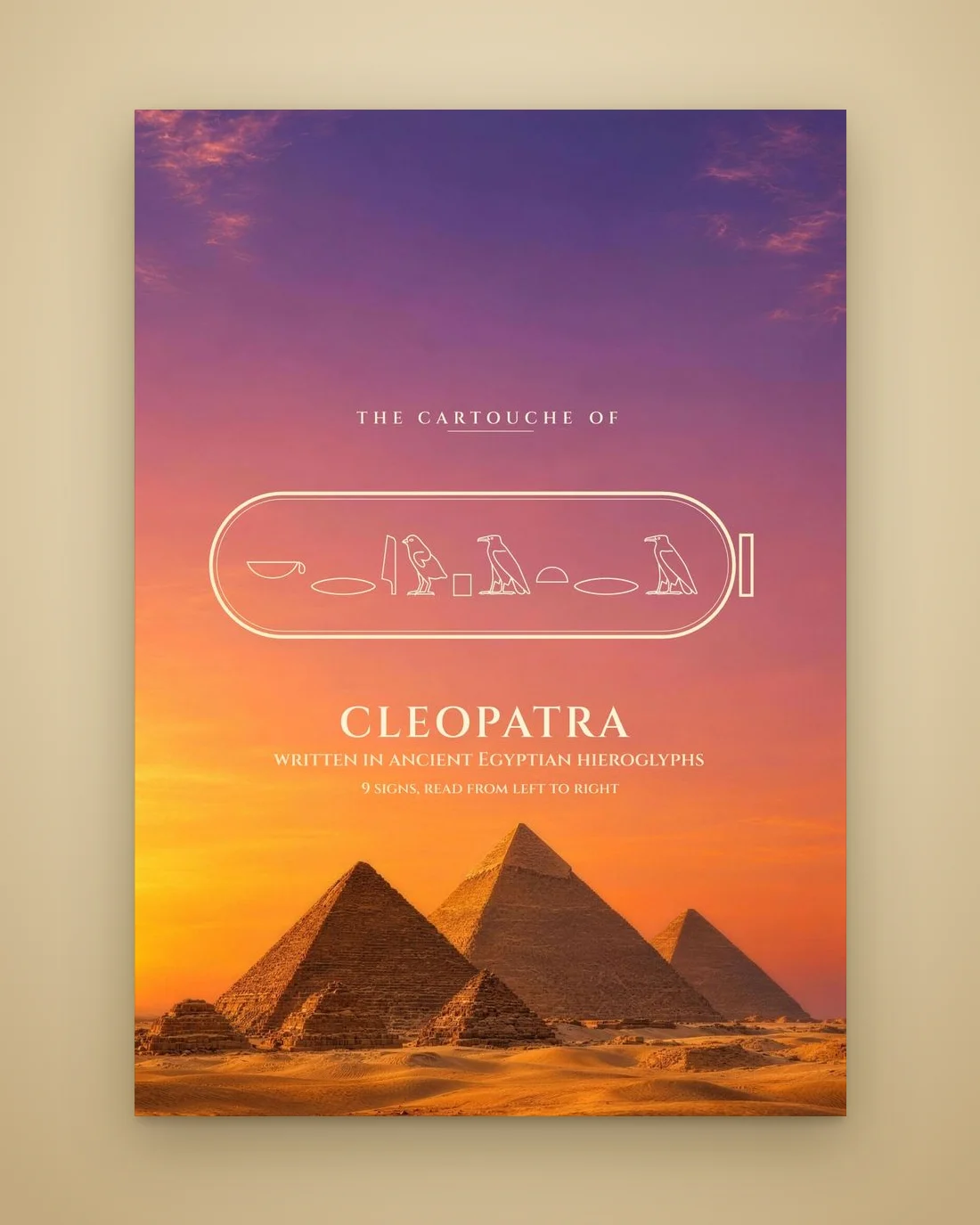
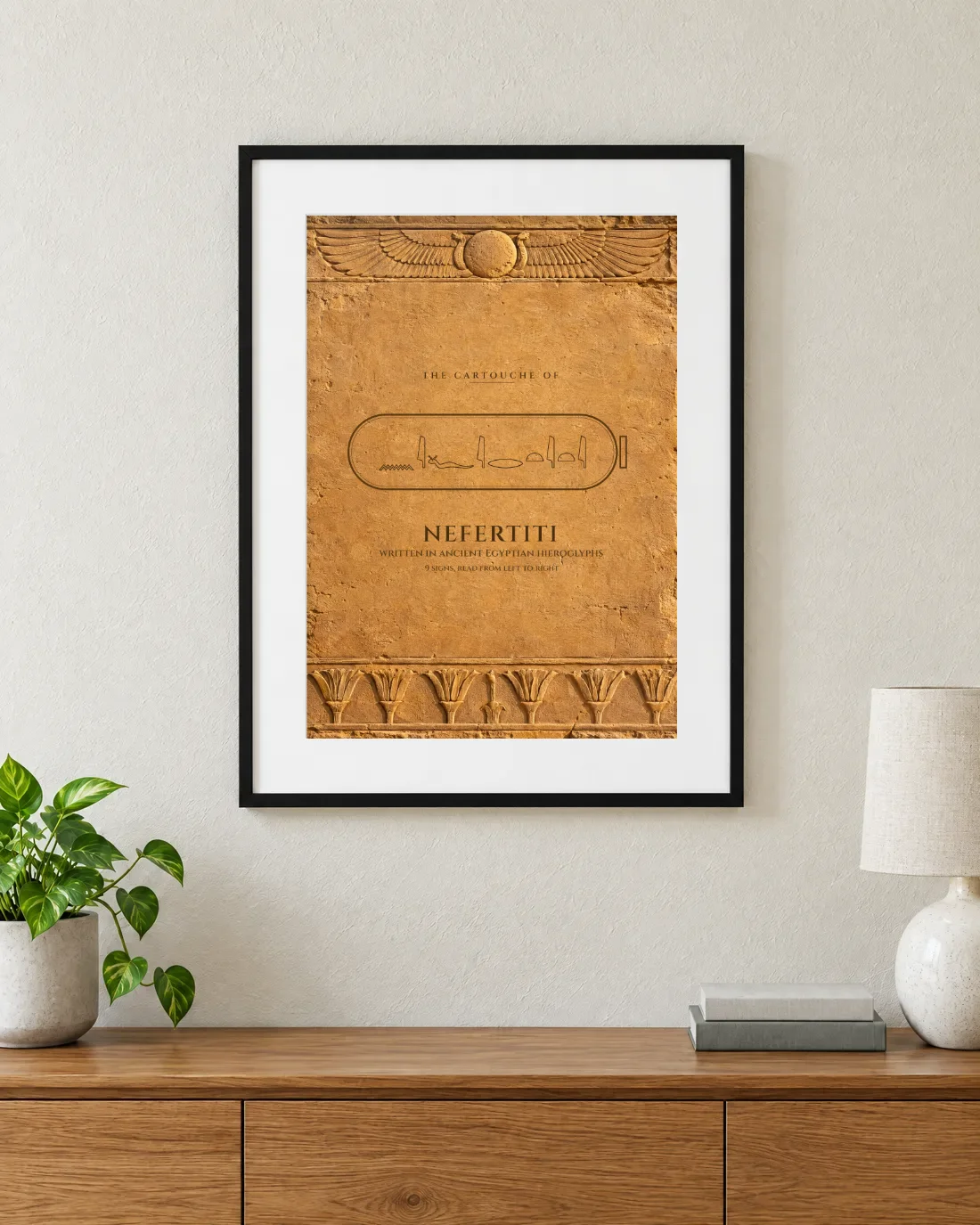
Their name in hieroglyphs, to keep
Prints for the wall, framed names, pictures by email and the course as a gift. Postage included, 14-day guarantee.
Visit the Store